Several times each week we distribute by e-mail a timely “IHR News and Comment” roundup of news, analysis and commentary items. To subscribe, enter your email below:
Did You Know the IHR is a Nonprofit?
That means our work depends entirely on support from men and women like you.
Because the Institute is recognized by the IRS as a not-for-profit public interest educational enterprise, your donation is tax-deductible. If you value what the IHR stands for, now is the time to show it.
IHR News & Views
-

… With the aid of the civilian population, mass graves had been discovered, in which thousands of corpses had been buried. These graves were to be opened and the commission was to establish whom the [Soviet] NKVD had murdered … The exhumations in Vinnytsia began on May 25, 1943, and were carried on in three places. The [local] population was of the opinion that there were around 20,000 victims in the war years … I had been a soldier in the Ukrainian army during the First World War and had seen many men killed in battle, but what I had then seen can in no way be compared with what I witnessed in that park … The horror of Vinnytsia I shall never forget, and it is doubtful whether ever a Dante would be able to portray the agony that had taken place.
-
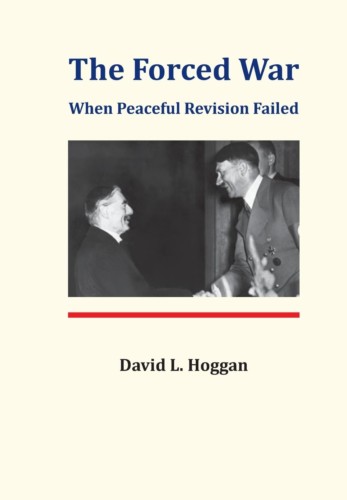
In this important, detailed study of the origins of the Second World War, Dr. Hoggan explains why Hitler decided to attack Poland in 1939, and examines the short-sighted policies that made war all but inevitable. The author dismantles the often-repeated charge of sole German responsibility for the war, which for many years has been a centerpiece of the prevailing narrative of twentieth century history. The eminent American historian Harry E. Barnes called this “the first thorough study of the responsibility for the causes of the Second World War in any language … likely to remain the definitive revisionist work on this subject for many years.” With an introduction by Mark Weber, dust jacket, detailed index, source notes, extensive bibliography, map, and 30 photographs. Also available in softcover edition.
-

Since the last “good war,” a debate has ensued over the moral legitimacy of the use of nuclear weapons, particularly against civilians. The critics hold that it is a crime to incinerate civilians en masse; defenders commonly claim that the bombing was necessary to bring the war to a close, thereby saving countless American lives. Most of those who make this claim do so in earnest. The problem is that this defense is both historically false, and taken to its logical conclusion, extremely dangerous … The U.S. War Department and related agencies that specialized in producing hate propaganda and lies developed specifically racialist attacks on the Japanese.
-

No aspect of the American Civil War left behind a greater legacy of bitterness and acrimony than the treatment of prisoners of war. “Andersonville” still conjures up images of horror unmatched in American History. And although Northern partisans still invoke the infamous Southern camp to defame the Confederacy, the Union had its share of equally horrific camps. Prison camps on both sides produced scenes of wretched, disease-ridden and emaciated prisoners as repulsive as any to come out of the Second World War … In addition to camps for captured soldiers, the North also established concentration camps for civilian populations considered hostile to the Federal government.
-

In years when so many politicians and foreign policy experts waxed poetically about their vision of a “rules-based international order” of enduring global harmony, John Mearsheimer persistently warned against the delusions and dangers of this outlook. For years he has been a leading voice for a realist foreign policy, an outlook impressively laid out in his most important work, The Tragedy of Great Power Politics … a hard-nosed examination of international politics rooted not in sentiment or presumed idealism, but in the immutable realities of power politics … While liberals speak of economic interdependence and international norms, and neoconservatives push regime change in the name of “democracy,” Mearsheimer contends that material power, not ideology, drives the foreign policy decision-making of government leaders.
-

How accurate is this hallowed portrayal of America’s role in World War II? As we shall see, it does not hold up under close examination … The three Allied leaders accomplished what they accused the Axis leaders of Germany, Italy and Japan of conspiring to achieve: world domination … Presidential deception to justify war did not start with George W. Bush. Americans who express admiration for the US role in World War II, and for Franklin Roosevelt’s presidential leadership, have little moral right to complain when presidents follow his example and lead the country into war by breaking the law, subverting the Constitution, and lying to the people.
-

Many Americans think of Abraham Lincoln, above all, as the president who freed the slaves. Immortalized as the “Great Emancipator,” he is widely regarded as a champion of black freedom who supported social equality of the races, and who fought the American Civil War to free the slaves. While it is true that Lincoln regarded slavery as an evil and harmful institution, it also true, as this paper will show, that he shared the conviction of most Americans of his time, and of many prominent statesmen before and after him, that blacks could not be assimilated into white society. He rejected the notion of social equality of the races, and held to the view that blacks should be resettled abroad.
-

America’s leaders understood Japan’s desperate position: the Japanese were willing to end the war on any terms, as long as the Emperor was not molested. If the US leadership had not insisted on unconditional surrender — that is, if they had made clear a willingness to permit the Emperor to remain in place — the Japanese very likely would have surrendered immediately, thus saving many thousands of lives … General Curtis LeMay, who had pioneered precision bombing of Germany and Japan (and who later headed the Strategic Air Command and served as Air Force chief of staff), put it most succinctly: “The atomic bomb had nothing to do with the end of the war.”
-

More than once I have come across the view that if British lads of the 1940s could have foreseen the state of their country today, they would never have bothered to fight the Second World War. Few of those who have heard that view may realize that there is empirical evidence to support it … The prevailing tone of their letters is one of bitterness over what had become of the county they once cherished. Of the four or five most often voiced complaints, the most common is over mass migration from other countries and continents, and how that has drastically changed British life, culture and society … “The men who offered their lives have been betrayed and gave their lives in vain. Most of the older people say thank goodness we are ending our lives. It is no longer the Britain that we fought for.”
-
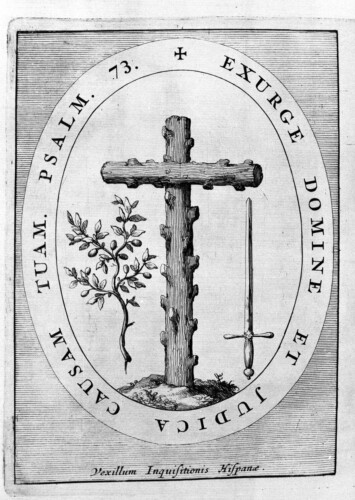
It is nearly impossible to dig into any chapter of Jewish history without uncovering lessons for our own age. Spain during the 15th and 16th centuries is a particularly striking example. Even today, our view of this period, and particularly of the Spanish Inquisition, colors our attitudes regarding relations between Jews and non-Jews. The Inquisition is considered one of Jewish history’s darkest chapters — and one of Christian history’s most shameful.
-

In an age when vast amounts of information from a wide range of sources are instantly available online, it can be difficult to sort out what’s reliable, useful, and trustworthy. In response to many inquiries over the years, here are recommended books on five important historical topics: The Second World War, American History, International Relations, Communism, Marxism and the Soviet Union, and, Zionism, US-Israel Relations, and the ‘Jewish Question.’ This listing is neither exhaustive nor final. Additional subject categories and titles are planned, and descriptions may be revised or updated.
-
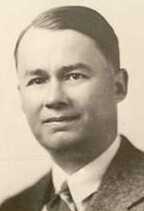
… This flagrant betrayal of the principles and goals for which the US fought in World War II, Chamberlin explains [in America’s Second Crusade], was inevitable given Roosevelt’s abiding trust in Soviet dictator Stalin, and his unwillingness to leverage America’s massive military and economic aid to the Soviets to press for a better postwar world … This book … distinguishes itself by challenging the American public to consider that the death, destruction, and trauma of the Second World War may not have been “worth it” in the end. Chamberlin is … not afraid to measure the stated goals of Franklin Roosevelt and Winston Churchill against the objective historical record by which the question he poses might be answered. The arguments for America’s entry into the war, he concludes, ultimately come up wanting.
-

In a remarkable but under-reported address, one of America’s most prominent and influential political figures has acknowledged the “immense” and “outsized” Jewish role in the US mass media and cultural life. Joe Biden – now President of the U.S. – said that this has been the single most important factor in shaping American attitudes over the past century, and in driving major cultural-political changes. “Jewish heritage has shaped who we are – all of us – as much or more than any other factor in the last 223 years. And that’s a fact,” Joe Biden told a gathering of Jewish leaders in Washington, DC … “Behind of all that, I bet you 85 percent of those [major social-political] changes, whether it’s in Hollywood or social media, are a consequence of Jewish leaders in the industry. The influence is immense … And, I might add, it is all to the good,” he went on.
-

It is not often that one is privileged to review a book of monumental import, a truly significant “breakthrough” from obscurantism to historical knowledge and insight. But such a book is the magnificent work by A.J .P. Taylor, The Origins of the Second World War … The central theme of Taylor is simply this: Germany and Hitler were not uniquely guilty of launching World War II (indeed they were scarcely guilty at all) … Basically, Hitler has no “master plan”; he was a German intent, like all Germans, on revising the intolerable and stupid Versailles-diktat, and on doing so by peaceful means, and in collaboration with the British and French … Not only did Hitler do this with insight, he did it with patience, as Taylor excellently shows …
-

… Jews wield immense power and influence in the United States. The “Jewish lobby” is a decisive factor in US support for Israel. Jewish-Zionist interests are not identical to American interests. In fact, they often conflict. As long as the “very powerful” Jewish lobby remains entrenched, there will be no end to the Jewish-Zionist grip on the US political system and the American media, the Zionist oppression of Palestinians, and the Israeli threat to peace.
-

In line with a recent crackdown policy, YouTube has “restricted” a number of independently produced videos of IHR talks and presentations. To watch a “restricted” video, the viewer must first click through a warning screen. Also, comments on the video are not allowed, and the number of views is not given. Even worse, YouTube will never “suggest” a “restricted” video to viewers, which is how many people find our videos. While YouTube claims that its “restriction” policy is aimed at videos with “inflammatory religious or supremacist content,” applying it to IHR videos is absurd. YouTube restricts our voice not because we have violated any objective standards, or because we have done anything wrong or illegal — but because it doesn’t like what we say.
-

No figure of modern French history is as honored as Charles de Gaulle … In 1940 he refused to accept his country’s defeat by Germany, and from London he founded and led the pro-Allied “Free French” force during World War II. From 1944 to 1946 he headed the provisional government of France. In 1958 he was called from retirement by popular acclaim to resolve the seemingly unsolvable crisis over Algeria … During the years that he dominated his country’s political life – 1958-1969 – he charted an independent foreign policy, tied neither to the US nor the USSR, and strove to make France the preeminent nation in Europe … It’s impossible to read any lengthy biography of this man without admiration for his audacious self-confidence, courage, determination, and cunning.
-
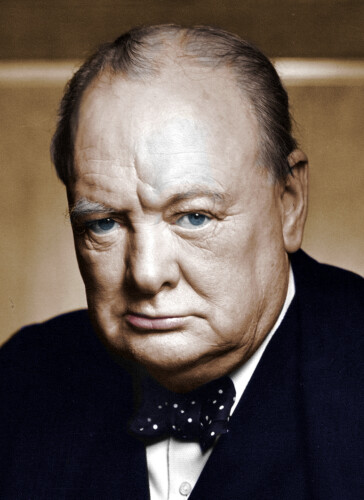
… While it’s an artistic achievement and grand entertainment, “Darkest Hour” is badly flawed history … “Darkest Hour” reinforces the widespread belief that Churchill’s speeches played a crucial role in sustaining British morale. A scholar who has carefully looked into the matter has found that this view is largely a myth … “Darkest Hour” reinforces the widely held impression, which Churchill himself encouraged, that an honorable or lasting peace with Hitler was simply not possible. But as he himself later acknowledged, that’s simply not true … The British leader’s famous “We shall never surrender” speech was little more than “sublime nonsense,” says British historian John Charmley.
-

Hiroshima native Kohchi was a 16-year-old schoolboy when his city was devastated by the first nuclear attack in history. He tells the dramatic, personal story of how he experienced and survived the bombing, and provides a moving account of his search for his family through the burning rubble of the doomed city. Then Kohchi recalls how, years later, he forced himself to come to grips with his past and uncover the facts about the bombing and the history the led up to it. The author’s frankness and humane spirit make this a first-hand Japanese account of a war crime that dwarfs almost all others. A unique revisionist classic. Praised by the Japan Times newspaper as a “noteworthy” and “authentic” personal account, and by Bookwatch newsletter as a “moving, gripping account.” With full color dust jacket, photos and notes
-

… Judaism is not just “another religion.” It’s unique among the world’s major religions. The core values and ethos of Judaism are markedly unlike those of Christianity, Islam, and the other great faiths … A core message of the Hebrew scriptures is that Jews are a divinely “chosen” people — a unique community distinct from the rest of humanity … The seemingly intractable Middle East conflict is more than just a problem of Zionism or politics, or a dispute over land. Israel’s often arrogant policies, and especially its inhumane treatment of non-Jews, have roots in centuries-old attitudes that are laid out in ancient Jewish religious writings.
-

A little-known chapter of history is the wide-ranging collaboration between Zionism and Hitler’s Third Reich. During the 1930s, Jewish Zionists and German National Socialists shared similar views on how to deal with the “Jewish Question.” They agreed that Jews and Germans were distinctly different nationalities, and that Jews did not belong in Germany. During the 1930s no nation did more to substantively further Jewish-Zionist goals than Hitler’s Germany.
-

The Anglo-Boer War of 1899-1902 was more than the first major military clash of the 20th century. Pitting as it did the might of the globe-girdling British Empire, backed by international finance, against a small pioneering nation of independent-minded farmers, ranchers and merchants in southern Africa who lived by the Bible and the rifle, its legacy continues to resonate today. The Boers’ recourse to irregular warfare, and Britain’s response in herding a hundred thousand women and children into concentration camps foreshadowed the horrors of guerilla warfare and mass detention of innocents that have become emblematic of the 20th century.
-
Collusion: Franklin Roosevelt, British Intelligence, and the Secret Campaign to Push the US Into War

Secretive and unlawful collusion by an American leader with a foreign power that subverts the US political process is not new. The most far-reaching and flagrant case was by President Franklin Roosevelt in 1940-41. In the months before the US formally entered the war in the wake of the Japanese attack on Pearl Harbor, Roosevelt did everything he could to get America into the global conflict without actually declaring war. The cooperation with British intelligence by the President and other high-ranking US officials during that period was quite illegal. Such collusion by the nominally neutral US to further the war aims of a foreign government was contrary to both US law and universally accepted international norms.
-

… I’m going to try to extract from my experience certain basic sort of tactics that I think the Jewish lobby has used over the years pertaining to my particular situation … The first and major tactic that I discovered in their attack on me was their reliance on lies — just straight-up lies. There’s no other way to describe it, just telling lies. Many of the categories that I will enumerate overlap, and many of them could also come under this general rubric of telling lies. But I think that if one had to isolate a single tactic, it was a tactic of telling lies. I think they’ve elevated telling lies to a very high artistic form.
-

… In August 1941 Hitler permitted a Red Cross delegation to visit the camp for Soviet POWs in Hammerstadt. It is these contacts that resulted in an appeal to the Soviet government, requesting that it should send food parcels for our officers and men. We are prepared to fulfill and comply with the norms of the Geneva convention, Moscow said in its reply, but sending food in the given situation and under fascist control is the same as making presents to the enemy … How great was Stalin’s hatred for those who had found themselves behind enemy lines. It made no difference: who, where, how and why? Even the dead were considered to be criminals.
-

Revisionism as applied to World War II and its origins (as also for previous wars) has the general function of bringing historical truth to an American and a world public that had been drugged by wartime lies and propaganda … Revisionism brings to the artificial frenzy of daily events and day-to-day propaganda, the cool but in the last analysis glorious light of historical truth. Such truth is almost desperately needed in today’s world.
-

Mark Weber explains why the work of the IHR in countering the forces of historical deceit, bigotry and cultural distortion is vitally important. An awareness of factual history is essential to an understanding of ourselves and the great issues of our age, says the IHR director in this five-minute video presentation. Unless and until the interests that have gripped our nation are clearly identified and discredited, he says, there will be no change in basic policies or direction.
-

Over the centuries, rage and hostility against Jews has repeatedly erupted in terrible violence. Again and again, Jews have been driven out of countries where they’d been living. Why does anti-Semitism exist? And why has furious hostility toward Jews broken out, again and again, in the most varied nations, eras and cultures? … Anti-Semitism is not a mysterious “disease.” As Herzl and Weizmann suggested, and as history shows, what is often called anti-Semitism is the natural and understandable attitude of people toward a minority with particularist loyalties that wields greatly disproportionate power for its own interests, rather than for the common good.
-

… A Zionist Jew, by definition, owes his primary loyalty to the Jewish community and to Israel. Zionism is not compatible with patriotism to any country or entity other than Israel and the world Jewish community … Zionist Jews and their non-Jewish supporters embrace a blatant double standard. Jewish-Zionist organizations, along with their non-Jewish allies, support one social-political ideology for Israel and the world Jewish community, and a completely different one for the United States and other non-Jewish countries. They insist that ethnic nationalism is evil and bad for non-Jews, while at the same time they vigorously support ethnic nationalism — that is, Zionism — for Jews.
-

Nine-Eleven would not have occurred if the U.S. government had refused to help Israel humiliate and destroy Palestinian society. Few express this conclusion publicly, but many believe it is the truth. I believe the 9/11 catastrophe could have been prevented if any U.S. president in recent decades had had the courage and wisdom to suspend all U.S. aid until Israel withdrew from the Arab land seized in the 1967 Arab-Israeli war. The U.S. lobby for Israel is powerful and intimidating, but any determined president could prevail and win overwhelming public support for the suspension of aid by laying these facts before the American people.
-

To deal with the massive unemployment and economic paralysis of the Great Depression, both the US and German governments launched innovative and ambitious programs. Although President Franklin Roosevelt’s “New Deal” measures helped only marginally, the Third Reich’s much more focused and comprehensive policies proved remarkably effective. Within three years unemployment was banished and Germany’s economy was flourishing. And while Roosevelt’s record in dealing with the Depression is pretty well known, the remarkable story of how Hitler tackled the crisis is not widely understood or appreciated.
-

… The Irgun was not the only Jewish terrorist group but it was the most active in causing indiscriminate terror in pre-Israel Palestine. Up to the time of the Jaffa attack, its most spectacular feat had been the July 22, 1946, blowing up of the King David Hotel in Jerusalem, with the killing of 91 people – 41 Arabs, 28 Britons and 17 Jews. The other major Jewish terrorist group operating in Palestine in the 1940s was the Lohamei Herut Israel – “Fighters for the Freedom of Israel,” Lehi in the Hebrew acronym – also known as the Stern Gang after its fanatical founder Avraham Stern.
-

American Jews sympathetic to Israel dominate key positions in all areas of our government where decisions are made regarding the Middle East. This being the case, is there any hope of ever changing U.S. policy? … The answer to achieving an even-handed Middle East policy might lie elsewhere — among those who support Israel but don’t really know why. This group is the vast majority of Americans. They are well-meaning, fair-minded Christians who feel bonded to Israel – and Zionism – often from atavistic feelings, in some cases dating from childhood.
-

I was in politics for fifteen years, and I think you should start with the assumption: never trust a politician … When people finally learn the truth, they turn against those who have been lying to them. And I think that if the movement of which you people are the cutting edge can retain dispassion in the face of outrages, setbacks and humiliations, the truth can ultimately prevail. You are doing something worse than criticizing the government of the United States; you’re threatening the security of the state of Israel. And the Jewish community is dedicated to preserve that state, and to destroy those who speak against it. Good luck!
-

… Add to these the operations of an organized propaganda capable, apparently, of doping Americans into belief in any myth, and there is formidable reason why public opinion should be so stupefied and stultified that the nation can be led from war to war in pursuit of ever retreating goals. Yet, despite the general numbness, Americans, surveying the results of half a century of intermeddling, dimly perceive that all is not well.
-

As dawn was breaking on Sunday morning, June 22, 1941, military forces of Germany, Finland and Romania suddenly struck against the Soviet Union. The stunning news of this attack was announced to the world by German radio at 5:30 that Sunday morning, when Reich Minister Joseph Goebbels broadcast the text of a proclamation by Adolf Hitler to the German people that laid out his reasons for the historic offensive. Following that was the broadcast of Germany’s declaration of war against the Soviet Union. This was in the form of a diplomatic note to the Soviet government. Because Hitler’s proclamation and the German Foreign Office declaration explain at some length the reasons and motives for the fateful decision to strike against the USSR, these are documents of historic importance. With a foreword by Mark Weber.
-
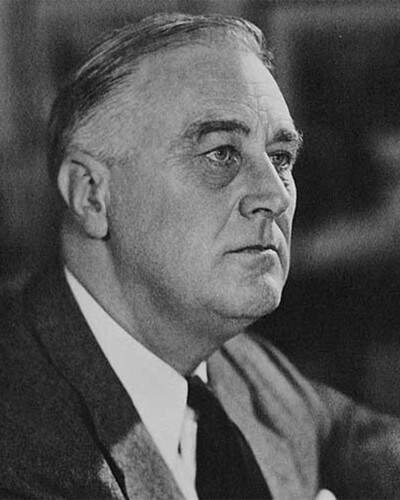
Several months before Japan’s Dec. 7, 1941, attack on Pearl Harbor, President Franklin Roosevelt secretly authorized devastating American bombing raids against Japanese cities. A top-secret document declassified in 1970 shows that in July 1941 Roosevelt and his top military advisers approved a daring plan to use American pilots and U.S. war planes – deceitfully flying under the Chinese flag – to bomb Japan’s major cities … An air strike force of 500 Lockheed Hudson bombers was to be organized as “The Second American Volunteer Group” under Chennault’s command. Its mission would be the “pre-emptive” bombing of Japan. The strategic objective of JB 355 was the “destruction of Japanese factories in order to cripple munitions and essential articles for maintenance of economic structure in Japan.”
News & Comment
How the ‘Math Wars’ in Palo Alto Reflect a Raging Nationwide Debate Over Equity and Excellence
San Francisco Chronicle
… Debate has raged in recent years about whether dividing kids into classes based on performance exacerbates the racial achievement gap and forecloses opportunities to lower-performing students. Both sides point to research to back up their claims, and California academics have at times engaged in bitter, highly public disputes. Socioeconomic achievement gaps and racial achievement gaps between Black and Hispanic students and white and Asian students have been widening statewide since 2009, according to a recent report by Sean Reardon, a Stanford professor. Palo Alto has also seen growing disparities in math proficiency rates in recent years. Last school year, 32% of Hispanic eighth-graders tested proficient in math, compared with 93% of Asian and 80% of white students, according to statewide assessment data.
Most Voters in Key States Want to Block US Arms Transfers to Israel
Jim Lobe – Responsible Statecraft
A majority of likely voters in each of six key swing states — Georgia, Iowa, Maine, North Carolina, Ohio, and Texas — say they approve of measures to block the transfer of bombs to Israel, according to a new poll released Wednesday by the Institute for Middle East Understanding (IMEU) and conducted by the YouGov data analytics firm. The poll also found that majorities or strong pluralities of 3,200 respondents in the six states favor “cutting $3.3 billion in taxpayer-funded weapons to Israel,” and believe the war in Iran benefits Israel more than the United States. As in other recent polls, the new survey, which was conducted from late September to mid-October, found that self-identified Democrats and Independents were significantly more likely to oppose more military transfers to Israel than self-identified Republicans in each state …
The War Tehran Believes Is Coming
J. Scahill, P. Salehi, R. Grim – Drop Site
The U.S. and Israel are preparing to resume attacks on Iran, according to senior Iranian officials and a U.S. official … Iran’s top security official, Gen. Mohsen Rezaei, the Secretary of Iran’s Supreme National Security Council and personal representative of Supreme Leader Ayatollah Mojtaba Khamenei, told Drop Site that, in the event of an attack, Iran still has capacity to continue launching missiles and drones at various U.S. assets across the region in retaliation, and that it would expand its range of targets … “Everyone must understand that action against Iran carries a cost,” he added … “We did not deploy all our capabilities in the previous stages. We brought more capabilities into operation in proportion to the intensity of the war, and we are also prepared for the next stage,” Rezaei said.
Secret 1930 American Plan For War Against Britain and Canada
Institute for Historical Review
American military officials drew up a secret plan in 1930 for war against Britain in which Canada would be the main battleground. “Joint Plan Red,” as it was known, envisaged the elimination of Britain as a trading rival. Professor Floyd Rudmin of Queens University in Ontario, Canada, charges that the plan was a blueprint for an American invasion of Canada. According to the plan, the United States was prepared to invade Canada if political unrest brought on by Quebec’s secession threatened American access to Canada’s fresh water and cheap hydroelectric power. The war plan document was drawn up by the Joint Board of the Army and Navy in May 1930, when Herbert Hoover was President … Its aim was to dismember the British empire on the grounds of “competition and interference with American foreign trade.”
‘We Are Fighting for a Just Peace’: Top Yemeni Official on Ansarullah’s New War With Saudi Arabia
Video - The Grayzone
Max Blumenthal interviews Mohammad al-Bukhaiti, a senior political official, spokesman, and member of the Political Council of Yemen’s “Houthi” movement (Ansar Allah). He talks about the war with Saudi Arabia, and the latest in the conflict. The official is remarkably poised and articulate as he explains the movement’s outlook and political goals, and its relationship with Iran. He responds to the often-repeated claim by US officials that the Ansar Allah movement is a “puppet” or “proxy” of Iran. Runtime: 43 mins.
British Government Pledges to ‘Strengthen’ Holocaust to ‘Education’ to Counter Anti-Semitism
BBC News
Education Secretary Lucy Powell says the government will “update and strengthen” Holocaust education within schools after a major review highlighted the “shocking scale” of antisemitism in British society. Schools and colleges in England will be required to recognise antisemitism as a distinct category of harm and take explicit action against it. It means anti-Jewish hatred will be treated as a specific safeguarding risk rather than being dealt with through existing measures to stop racism and bullying … The review also calls for stronger guidance on political impartiality for teachers.
Why Iran Didn’t Walk Away
Larry C. Johnson
… On May 8, 2018, Donald Trump announced that the United States was withdrawing from the Joint Comprehensive Plan of Action, the nuclear agreement that Iran had signed with the United States, Britain, France, Germany, Russia and China three years earlier … Iran had not violated the agreement … Iran’s patience was not unlimited, and it was never unconditional … The record shows a government that responded to the breach of an international agreement with restraint, then with measured and reversible pressure, and only escalated after its economy had been strangled and its officers and scientists killed. That is not the behavior of a regime determined to build a bomb at the first opportunity. It is the behavior of a government that wanted the deal to survive and concluded, slowly, that the United States would not let it.
By Pursuing a Big ‘Win’ in Iran, Trump is Destined to Lose
Paul R. Pillar – Responsible Statecraft
… What Trump would welcome as a “win” could take one of two basic forms: either the Iranian regime somehow cries “uncle” and makes concessions that clearly and significantly go beyond anything it offered before, or the regime collapses … Even considered separately, however, each of the two versions of a supposed “win” raises major questions … The most feasible way out of the war is a skeletal ceasefire agreement that defers most substantive negotiations, like the Memorandum of Understanding that the parties agreed to in June, but without the ambiguous language concerning the Strait of Hormuz that led the MoU to break down. A president looking for a “win” will have to rely on his rhetorical ability to depict such a ceasefire and the destruction already inflicted on Iranian forces as a victory.
The Israel Lobby’s Changing Fortunes
Scott McConnell – The American Conservative
A natural question to ask about Eli Clifton and Ian Lustick’s [new book] Israel’s Lobby is how it differs from the magisterial work of similar name published by John Mearsheimer and Stephen Walt nearly 20 years ago … Scores of Israel-First billionaires joined them with more power to shape American policy than ever before. As Clifton and Lustick put it, “These donors form the backbone of an Israel First movement which crosses party lines” … The authors track the exponential rise in the budgets of pro-Israel advocacy groups. AIPAC had $19.5 million in assets in 2000, nine times that amount in 2023. Similar advances were made by the Washington Institute for Mideast Policy, and the Jewish Institute for National Security of America … Clifton and Lustick have written an important, extremely well-researched book …
Harry Elmer Barnes, RIP
Murray N. Rothbard
… The quantity and scope of his productive output would alone stamp Harry Elmer Barnes as a memorable scholar, but this alone barely begins to scratch the surface of how remarkable a man he was. For he was that rarity among scholars: a passionately committed man. It was not enough for Harry to discover and set forth the truth; he must also work actively and whole-heartedly in the world on behalf of that truth … Like Beard and Flynn, Barnes found himself hounded by former friends and colleagues and denounced as a “Nazi” merely for cleaving to the liberal and pro-peace principles which all alike had shared a few short months before.
Barnes Against the Blackout: Essays Against Interventionism
Harry Elmer Barnes -- Book Available from IHR
An outstanding American historian is at his best in these passionate, rigorous, and well-reasoned essays and reviews on the Second World War, and on the “Cold War” that followed. These far-sighted writings are relevant today, because they counter the often-made claims of politicians and other “establishment” leaders about World War II to justify seemingly endless US military intervention overseas. The widely-accepted, “official” narrative about World War II, which has been promoted for decades in the mainstream media and by Hollywood, has been cited to justify the calamitous US wars in Vietnam, Afghanistan, Iraq, and Iran. This book of more than 350 pages includes the texts of nine Barnes writings.
Trump Endorses Embattled Israeli Prime Minister Netanyahu for Reelection
Associated Press
President Donald Trump on Sunday endorsed embattled Israeli Prime Minister Benjamin Netanyahu late in his reelection campaign … Trump said in a post on social media that Netanyahu “has been a Great Warrior Prime Minister, and an even greater Partner for Peace in combatting the Islamic Republic of Iran.” Israelis are set to vote Oct. 27, in the first national elections since Hamas attacked Israel on Oct. 7, 2023 … In his post, Trump again threatened to “soon finish the job” against Iran “unless they change their ways, rapidly,” but added he might not want to if Netanyahu loses the election. “If Israel has the wrong Leader, which would be anyone other than Bibi, America will have to do this work ourselves, and I am not inclined to do so,” Trump said.
College Students Are Testing at the Level of 10-Year-Olds
Joe Wilkins - Futurism
… According to a new “Survey of Adult Skills” conducted by the Organization for Economic Co-operation and Development — a forum for 38 high-income, predominantly Western countries — a not insignificant number of adult students enrolled in higher education are now reading and doing math at a level which, in a more functional society, would be alarming for a middle schooler … It found that across all OECD member countries, a full 8 percent of college students are reading at the level of a ten-year-old, if not worse. While countries like Germany and France rang in at under 5 percent, countries like Poland, Israel, and the United States blew the curve at 21, 20, and 14 percent, respectively. The numbers aren’t much better when it comes to math.
How Trump Made the World Go Nuclear
Andrew Day – The American Conservative
… The president underestimated Iran’s resilience and the intensity of its retaliation … He expected the war to last mere weeks if not days … The war has been a catastrophe for American interests … But the fallout could prove even bigger and more dramatic than all that. For while Trump claims he acted to prevent Iran from acquiring nuclear weapons, the war has made that outcome more likely, not less, experts told TAC. Moreover, it has undermined the cause of nuclear nonproliferation across the Middle East and beyond … No world leader could fail to notice that Iran was attacked precisely because it lacked a nuclear deterrent. Nor could anyone fail to hear the implicit nuclear threat contained within Trump’s pledges to wipe out Iranian civilization and unleash a level of military destruction not seen since World War II.
Netanyahu Has Driven Israel’s Standing in US to ‘Unprecedented Low’: Haaretz
Anadolu
Israeli daily Haaretz said on Friday that Prime Minister Benjamin Netanyahu has driven Israel’s standing in the US to an “unprecedented low.” “Anyone following the conduct of Israel and its relations with other countries, especially the United States, has for years warned of an unprecedented crisis in Israel’s strategic relations with its most important ally,” Haaretz said in an editorial … The damage continued with his “blatant interference in American politics in favor of (President Donald) Trump and the Republican Party,” and that “Israel’s standing among Democrats collapsed.”… US polls from recent months, the newspaper said, show a “sharp and unprecedented decline” in favorable attitudes toward Israel, especially among younger respondents … “No bombastic speech” by Netanyahu at the UN General Assembly can “paper over this bleak reality.”
The Houthis Are Not an Iranian Proxy
José Alberto Niño
In September 2026, Ansar Allah, derisively labeled as the Houthis in Western foreign policy circles, redrew the map of western Yemen in a matter of days … Secretary of State Marco Rubio branded Ansar an Iranian proxy … Helen Lackner, among the most respected Western scholars of Yemen, put it plainly … “The Houthis are not Iranian proxies. They are not Iranian servants. They don’t do what the Iranians tell them to do. They make their own decisions.” … Even the hawkish Institute for the Study of War agrees … “The Houthis are not an Iranian proxy, although their objectives often overlap with Iran’s strategic interests.” … Ansar Allah ultimately behaves as a national liberation movement that shares many of Iran’s enemies and welcomes Iranian assistance, yet it charts its own course whenever its interests diverge.
US Universities Get Millions to Do Military Research for Israel
M. Halgren, A. Rewegan - Responsible Statecraft
… Robot cockroaches, “terror-network” mapping, and rapid missile guidance are just three examples of at least 70 research projects U.S. universities have conducted on behalf of the Israeli Ministry of Defense (IMoD). Over a thousand pages of internal university and U.S./Israeli military documents reveal a sweeping, decades-long program to sponsor military research collaborations with at least 30 U.S. universities, from Cornell to the University of California at San Diego, since at least 2009. Projects are conducted in collaboration with the Israeli military, and sometimes explicitly incorporate environmental conditions in Palestine into the work … Recent reports … found millions of Israeli military dollars flowing into U.S. schools.
Why They Attack Us
Samuel Francis (Sept. 2001)
… In all the buckets of media gabble about the terrorist attacks in New York and Washington, not once have I heard any journalist ask any expert the simple question, “Why did the terrorists attack us?” … The blunt and quite ugly truth is that the United States has been at war for years — that it started the war in the name of “spreading democracy,” “building nations,” “waging peace,” “stopping aggression,” “enforcing human rights,” and all the other pious lies that warmongers always invoke to mask the truth, and that it continued the war simply to save a crook from political ruin. What is new is merely that this week, for the first time, the war we started came home — and all of a sudden, Americans don’t seem to care for it so much.
Israel’s New – and Terrifying – Security Doctrine
Trita Parsi
If you read one thing today, make sure it is this: In a stunning piece published by the head of one of Israel’s most prominent think tanks, Maj. Gen. Tamir Hayman describes the reality of Israel’s new security doctrine: A few crucial principles he describes:1. The United States is a “declining power” and, given its ongoing social and political shifts, will soon abandon Israel in any event … 5. “War as a Foundational State: War is essential to national security and cannot be replaced by a state of peace, which, as noted, is merely a means rather than an end … War is necessary, and preventive war is preferable because it secures a significant achievement at the outset.” … Important to note that Hayman does not advocate for this. Rather, he contends that this already is the new security doctrine of Israel.
Israel’s ‘New’ National Security Concept
Tamir Hayman – Institute for National Security Studies (Israel)
Israel’s national security concept is at a turning point that demands clarification … The following principles can be inferred from the security policy now being implemented … 1. primacy of Jewish Identity over Democracy: The state’s jewish identity takes precedence over its democratic system of government. This priority is intended to guarantee Israel’s continued existence as a Jewish state, even at the cost of eroding it’s democratic values … 6. Absolute Priority for Initiative and Offense over Defense: Preemptive, surprise strikes are viewed as the only way to achieve victory, giving offense precedence over defense. If Israel cannot withstand a surprise attack or ensure reliable advance warning, the only conclusion is that it must pursue a proactive policy of preventive strikes and wars.
How the ‘Math Wars’ in Palo Alto Reflect a Raging Nationwide Debate Over Equity and Excellence
San Francisco Chronicle
… Debate has raged in recent years about whether dividing kids into classes based on performance exacerbates the racial achievement gap and forecloses opportunities to lower-performing students. Both sides point to research to back up their claims, and California academics have at times engaged in bitter, highly public disputes. Socioeconomic achievement gaps and racial achievement gaps between Black and Hispanic students and white and Asian students have been widening statewide since 2009, according to a recent report by Sean Reardon, a Stanford professor. Palo Alto has also seen growing disparities in math proficiency rates in recent years. Last school year, 32% of Hispanic eighth-graders tested proficient in math, compared with 93% of Asian and 80% of white students, according to statewide assessment data.
Most Voters in Key States Want to Block US Arms Transfers to Israel
Jim Lobe – Responsible Statecraft
A majority of likely voters in each of six key swing states — Georgia, Iowa, Maine, North Carolina, Ohio, and Texas — say they approve of measures to block the transfer of bombs to Israel, according to a new poll released Wednesday by the Institute for Middle East Understanding (IMEU) and conducted by the YouGov data analytics firm. The poll also found that majorities or strong pluralities of 3,200 respondents in the six states favor “cutting $3.3 billion in taxpayer-funded weapons to Israel,” and believe the war in Iran benefits Israel more than the United States. As in other recent polls, the new survey, which was conducted from late September to mid-October, found that self-identified Democrats and Independents were significantly more likely to oppose more military transfers to Israel than self-identified Republicans in each state …
The War Tehran Believes Is Coming
J. Scahill, P. Salehi, R. Grim – Drop Site
The U.S. and Israel are preparing to resume attacks on Iran, according to senior Iranian officials and a U.S. official … Iran’s top security official, Gen. Mohsen Rezaei, the Secretary of Iran’s Supreme National Security Council and personal representative of Supreme Leader Ayatollah Mojtaba Khamenei, told Drop Site that, in the event of an attack, Iran still has capacity to continue launching missiles and drones at various U.S. assets across the region in retaliation, and that it would expand its range of targets … “Everyone must understand that action against Iran carries a cost,” he added … “We did not deploy all our capabilities in the previous stages. We brought more capabilities into operation in proportion to the intensity of the war, and we are also prepared for the next stage,” Rezaei said.
Secret 1930 American Plan For War Against Britain and Canada
Institute for Historical Review
American military officials drew up a secret plan in 1930 for war against Britain in which Canada would be the main battleground. “Joint Plan Red,” as it was known, envisaged the elimination of Britain as a trading rival. Professor Floyd Rudmin of Queens University in Ontario, Canada, charges that the plan was a blueprint for an American invasion of Canada. According to the plan, the United States was prepared to invade Canada if political unrest brought on by Quebec’s secession threatened American access to Canada’s fresh water and cheap hydroelectric power. The war plan document was drawn up by the Joint Board of the Army and Navy in May 1930, when Herbert Hoover was President … Its aim was to dismember the British empire on the grounds of “competition and interference with American foreign trade.”